Box Truck Dispatcher: What They Do, What They Charge & How to Pick a Good One (2026)
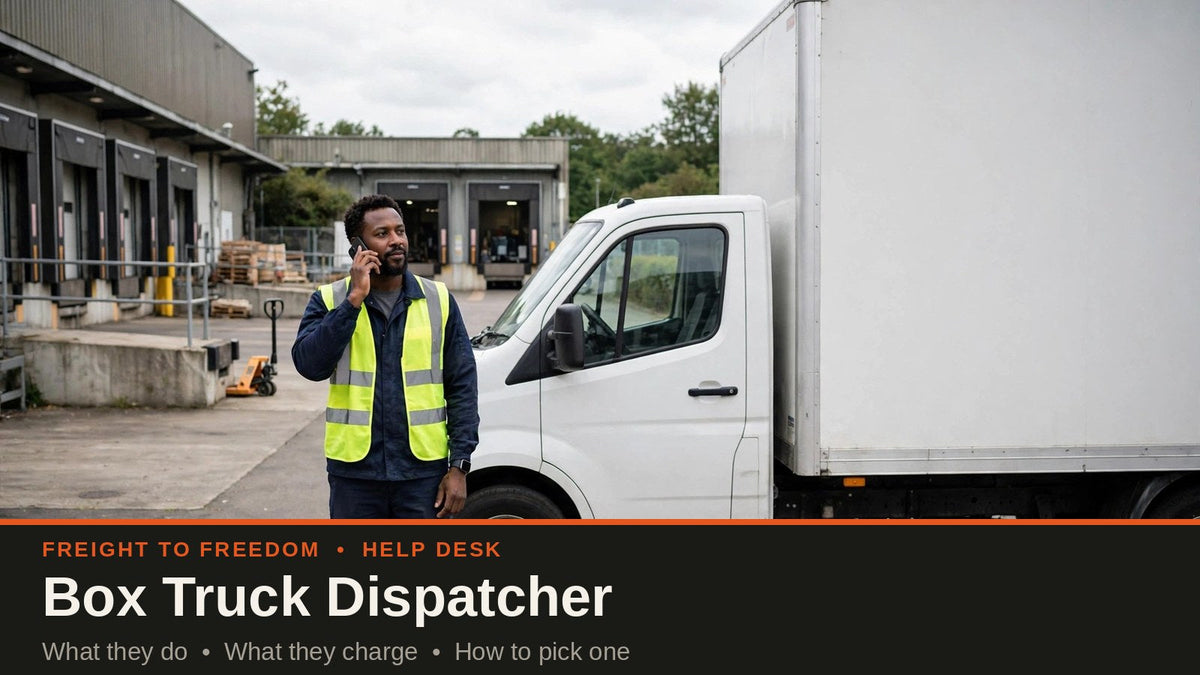
Box trucks are one of the easiest ways into trucking, with no CDL needed for trucks under 26,001 lbs, and one of the hardest to keep profitable. The loads are smaller, the rates are lower, and empty miles hurt more. That's why so many box truck owners look for a dispatcher, and why so many new dispatchers start with box trucks.
Whether you're hiring a box truck dispatcher or want to become one, here's how it works.
What does a box truck dispatcher do?
- Finds loads that fit a 16–26 ft truck: partials, LTL, local and regional runs, and expedited freight.
- Negotiates rates that cover the truck's cost per mile, including deadhead.
- Plans the week so the truck isn't sitting empty or driving 150 miles to its next pickup.
- Handles paperwork: carrier packets, rate confirmations, BOLs and PODs.
- Deals with problems: detention, liftgate issues, missed appointments, breakdowns.
Where box truck loads come from
| Source | What to know |
|---|---|
| Load boards (DAT, Truckstop, Direct Freight, 123Loadboard) | Filter by equipment and length. Many box truck loads are partials, so look at total revenue for the day, not one load. |
| Expedite networks (Sylectus and similar) | Time-sensitive freight that pays well for small trucks, but you usually need to be leased to or approved by an expedite carrier. |
| Shipper and carrier load portals | Large shippers and some programs let carriers book directly. Read each program's rules on using a third-party dispatcher first. |
| Local businesses and final-mile contracts | Furniture, appliance, building supply and distribution companies often need steady local box truck capacity. Repeat freight beats the board. |
A liftgate and a pallet jack open up far more loads. So do straps, blankets and a team that can do residential or inside delivery.
What do box truck dispatchers charge?
Box truck dispatchers usually charge a percentage of each load's gross, often around 8–12%, a bit higher than semi dispatching because the loads are smaller. Others charge a flat weekly fee per truck.
Here's what that means in dollars. A box truck grossing $3,000 a week at a 10% fee pays the dispatcher $300 a week, about $15,600 a year if it runs every week. A dispatcher who adds even $0.25 a mile in better rates more than pays for themselves.
Before agreeing to any fee, know your truck's break-even with our cost per mile calculator.
Red flags when hiring a box truck dispatcher
- Guaranteed weekly income. No dispatcher controls the market. “$10,000 a week guaranteed” is a sales line.
- Forced dispatch. You should approve every load. If they book without asking, walk away.
- Big upfront fees or long contracts you can't exit with short notice.
- No written agreement. A real dispatcher spells out the fee, duties and how either side can end it.
- They want your freight money. The broker should pay you or your factoring company directly. Your dispatcher invoices you for their fee.
- Call-center spam. If they called you 5 times this week reading a script, that's how they'll treat your truck too.
A good dispatcher asks about your costs, home time and lanes before talking price, sends you a weekly settlement summary, and picks up the phone when the truck breaks down.
How to become a box truck dispatcher
- Learn box truck freight: partials, liftgate loads, weight limits (often around 10,000 lbs of payload), and which loads need a CDL truck.
- Learn the rate math. Total daily revenue vs. total miles, including deadhead.
- Set up your business: LLC, EIN, business bank account and a written dispatch agreement.
- Stay a dispatcher, not a broker. Work only for carriers, get paid only by carriers, and don't decide which of several carriers gets each load. That's brokering under FMCSA's guidance.
- Sign carriers honestly. Many box truck owners are new authorities flooded with dispatch calls. Lead with who you are and real value, not promises.
Thinking about running your own box truck instead? Our guide 26 Feet to Freedom covers starting a no-CDL box truck business.
Frequently asked questions
Do box trucks need a dispatcher?
No. Many owners book their own loads. A dispatcher makes sense when you'd rather drive while someone else finds freight, negotiates and handles paperwork.
How much does a box truck dispatcher make?
At 10% of a $3,000 weekly gross, about $300 per truck per week. Income depends on how many trucks you dispatch and how steadily they run.
Do box truck dispatchers need a license?
There's no federal dispatcher license, but you must avoid acting as a broker without broker authority.
Can a box truck make money without a dispatcher?
Yes, especially with steady local or final-mile customers. Dispatchers help most when the truck relies on load boards.
What about cargo vans and hotshots?
The same model applies. Cargo vans lean on expedite freight; hotshots haul smaller flatbed and oilfield loads with tighter weight limits.
Learn to dispatch any equipment
The Freight Dispatcher Playbook covers box trucks, dry vans, reefers and flatbeds: setting up your dispatch business from home, pricing owner-operators, finding loads, negotiating rates and reaching drivers without being the spam call they hate.
Freight to Freedom is a private company and is not affiliated with FMCSA or USDOT. This article is for educational purposes only and is not legal advice. Requirements change often — confirm current rules at fmcsa.dot.gov.