What Does a Truck Dispatcher Do? A Day in the Life, Explained (2026)
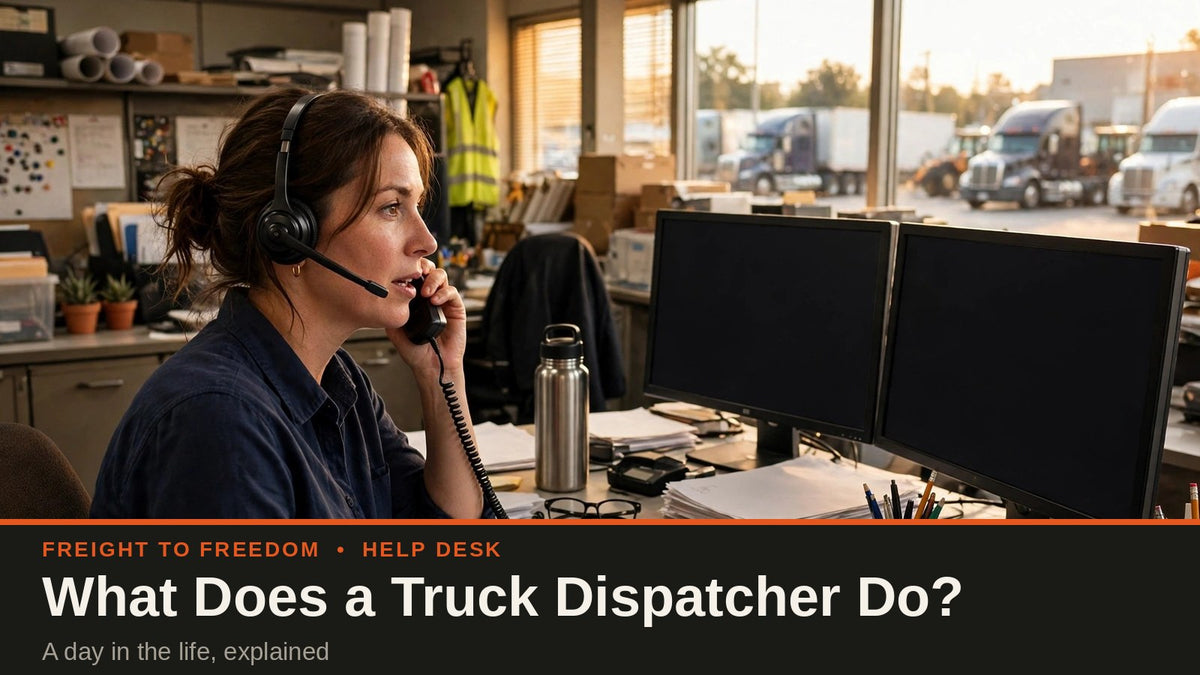
A truck dispatcher is the truck's business partner in the office. The driver drives; the dispatcher finds the freight, protects the rate and handles everything around the load so the truck keeps earning. In trucking, almost nothing moves without one.
The four core jobs of a truck dispatcher
- Negotiate rates. A good dispatcher knows the truck's cost per mile and what the lane is paying, and won't book a load that loses money just to keep the wheels turning.
- Plan routes and reloads. Every empty (deadhead) mile burns fuel and time for zero pay. Dispatchers book the next load before the current one delivers.
- Handle the paperwork. Carrier packets, rate confirmations, bills of lading (BOLs) and proofs of delivery (PODs). No clean paperwork, no payment.
- Solve problems on the road. Detention at the dock, breakdowns, missed appointments, rejected loads. The dispatcher is on the phone so the driver can focus on driving safely.
A day in the life
| Time | What the dispatcher is doing |
|---|---|
| 6:00–7:00 am | Check in with each driver: location, hours left, any truck issues. Confirm today's appointments. |
| 7:00–10:00 am | Prime load-board hours. Search reloads for trucks delivering today or tomorrow, call brokers, negotiate. |
| 10:00 am–12:00 pm | Send carrier packets, review rate confirmations, send load details to drivers. |
| Afternoon | Track loads, update brokers, chase detention, handle problems as they come up. |
| 3:00–5:00 pm | Second wave of postings. Plan tomorrow's and the weekend's reloads. |
| End of day | Collect PODs, send invoices or factoring paperwork, log everything. |
The hours aren't strictly 9 to 5. Trucks run nights and weekends, and a driver broken down at 2 am will call.
How a load moves, from booking to payment
- Find a load on a load board like DAT or Truckstop, or through a broker or shipper contact.
- Check the broker: verify their MC number on FMCSA's SAFER site, and check credit and days-to-pay.
- Negotiate the rate on all miles, including deadhead, plus detention and TONU (truck ordered, not used) terms.
- Decide: does it cover the truck's cost plus profit? If not, walk away.
- Sign the paperwork: carrier packet and rate confirmation, then dispatch the driver.
- Pickup: the shipper signs the BOL; the driver records the seal number and sends a photo.
- In transit: update the broker and book the next load.
- Delivery: the receiver signs the POD, noting any damage.
- Invoice or factor the same day with the rate con, BOL and POD attached.
- Get paid: the carrier is paid by the broker or factoring company, and an independent dispatcher collects their fee from the carrier.
What equipment do dispatchers work with?
| Equipment | Typical freight | Difficulty to dispatch |
|---|---|---|
| Box truck | Local and regional deliveries, partials, final mile | Easy–moderate |
| Dry van | Palletized general freight | Moderate; biggest market |
| Reefer | Food, produce, pharmaceuticals | Moderate–hard; temperature rules |
| Flatbed / step deck | Steel, lumber, machinery | Hard; tarps, securement, height limits |
| Hotshot | Smaller flatbed and oilfield loads | Moderate |
Dispatcher vs freight broker vs driver manager
| Role | Works for | Gets paid by | Needs FMCSA authority? |
|---|---|---|---|
| Truck dispatcher | The carrier | The carrier (salary or fee) | No, if acting only as the carrier's agent |
| Freight broker | The shipper | The margin between shipper rate and carrier rate | Yes: broker authority + $75,000 bond or trust |
| Driver manager | The carrier | Salary | No; focuses on drivers, hours and home time more than freight |
FMCSA's 2023 guidance says a dispatcher who uses their own judgment to decide which of several carriers gets a load is “allocating traffic,” which is brokering. Work only for carriers, under written agreements, and keep carriers from competing for the same loads.
What makes a good truck dispatcher?
- Calm under pressure, because something always goes wrong.
- Comfortable with numbers: cost per mile, rate per mile, deadhead.
- Good on the phone and honest with drivers.
- Organized enough to track several trucks, appointments and documents at once.
- Knows US geography, weather and which markets have reloads.
Frequently asked questions
Do truck dispatchers need a CDL?
No. Dispatchers don't drive. Driving experience helps, but it isn't required.
Is truck dispatching hard?
It's learnable, but demanding. The hardest parts are the hours, the problem-solving and earning drivers' trust.
Can dispatchers work from home?
Yes. Independent dispatchers work fully from home, and many company dispatch jobs are remote or hybrid. See our guide to remote truck dispatcher jobs.
How much do truck dispatchers make?
Company dispatchers earn around $50,000 a year at the median. Independents earn a percentage per truck. See our truck dispatcher salary breakdown.
How do I become a truck dispatcher?
Learn the terms and rate math, then either apply for a company dispatch job or set up your own dispatch business. Our step-by-step guide covers both.
Learn the whole job in one guide
The Freight Dispatcher Playbook covers everything above in depth: rate negotiation with cost-per-mile math, route and reload planning, the paperwork chain, solving road problems, and how to build a dispatch business from home.
Freight to Freedom is a private company and is not affiliated with FMCSA or USDOT. This article is for educational purposes only and is not legal advice. Requirements change often — confirm current rules at fmcsa.dot.gov.