Form 2290 Explained (2026): Who Files, How Much the HVUT Costs & When It's Due
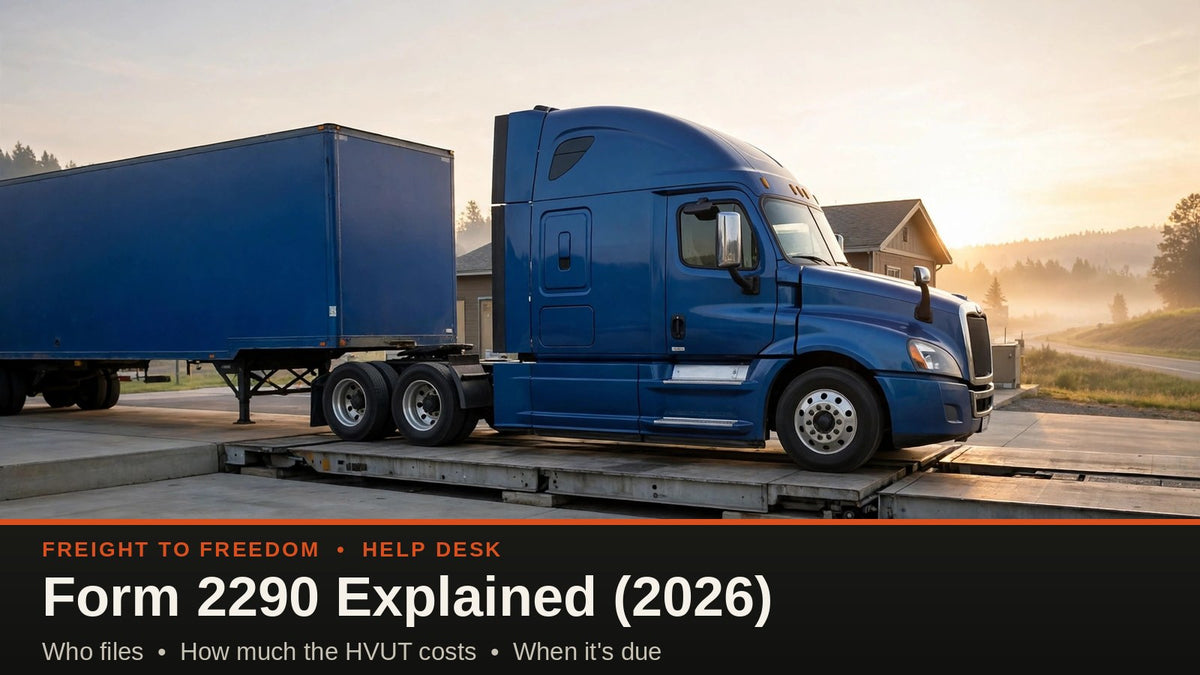
If you run a truck with a taxable gross weight of 55,000 pounds or more on public highways, you owe the federal Heavy Vehicle Use Tax (HVUT) — and you report it on IRS Form 2290. Miss it and you can't register or renew your plates, and the IRS adds penalties and interest.
Here's everything an owner-operator or small fleet needs to know, in plain English.
Who has to file Form 2290?
You must file if you have a highway motor vehicle registered in your name with a taxable gross weight of 55,000 lbs or more. Taxable gross weight is the truck's empty weight, plus the empty weight of the trailers you customarily pull, plus the heaviest load you customarily carry — for most tractor-trailers, that lands at or over 75,000 lbs.
- Owner-operators: If the truck is registered in your name, the 2290 is your responsibility — even if you're leased onto a carrier.
- Box trucks and smaller units under 55,000 lbs don't owe HVUT.
- Low-mileage trucks still file. See “Suspended vehicles” below.
How much is the Heavy Vehicle Use Tax?
The tax is based on taxable gross weight for a full year of use:
| Taxable gross weight | Annual tax |
|---|---|
| Under 55,000 lbs | $0 — no tax |
| 55,000 lbs | $100 |
| 55,001 – 75,000 lbs | $100 + $22 for each 1,000 lbs over 55,000 |
| Over 75,000 lbs | $550 (the maximum) |
Most Class 8 tractor-trailers pay the $550 maximum. If you put a truck on the road partway through the year, the tax is prorated for the months left in the tax period.
The HVUT you pay is a deductible business expense for owner-operators. Keep your stamped Schedule 1 and payment confirmation with your tax records.
When is Form 2290 due?
- The tax period runs July 1 through June 30.
- For trucks on the road in July, it's due August 31 — that's the big annual deadline.
- For a truck first used later in the year, it's due by the last day of the month after the month you first used it. Put a truck in service in November? File by December 31.
- If a due date falls on a weekend or holiday, it moves to the next business day.
Suspended vehicles (low-mileage trucks)
If you expect a truck to run 5,000 miles or less on public highways during the tax period (7,500 miles for agricultural vehicles), it's a suspended vehicle — you still file Form 2290, but you don't pay the tax. If the truck goes over the limit, you file an amended return and pay by the end of the month after it crosses the line.
What is Schedule 1 — and why you need it
After the IRS accepts your 2290, you get a stamped Schedule 1. That's your proof of payment. Your state needs it to register or renew your plates, so keep a copy in the truck file and a digital copy where you can find it fast.
E-file. E-filing through an IRS-authorized provider usually returns your stamped Schedule 1 within minutes. Paper returns can take weeks. E-filing is required if you report 25 or more taxable vehicles.
How to file Form 2290
- Get your info together: your EIN (an SSN is not accepted on Form 2290), each truck's VIN, its taxable gross weight, and the month it was first used.
- Choose how to file: e-file through an IRS-authorized e-file provider (fastest), or mail a paper return. We recommend ExpressTruckTax — it walks you through the form step by step and emails your stamped Schedule 1 once the IRS accepts it.
- Pay the tax: options include EFTPS, electronic funds withdrawal when you e-file, or a check or money order. Credit and debit card payments are also accepted through IRS-approved processors.
- Save your stamped Schedule 1 and your payment confirmation.
Ready to file? File your Form 2290 online with ExpressTruckTax → Have your EIN, VINs and taxable gross weights handy before you start.
Check the current instructions and payment options on the IRS Form 2290 page before you file.
Penalties for filing late
The IRS charges a late-filing penalty of 4.5% of the tax due per month, up to five months, plus a separate late-payment penalty and interest. On a $550 truck that adds up fast — and without a stamped Schedule 1, your plates can't be renewed.
Keep every trucking deadline in one place
The 2290 is just one of the deadlines that can cost an owner-operator money. Keep What You Haul includes a full year-round trucking tax calendar — 2290, quarterly estimated taxes, IFTA and more — plus a trucking chart of accounts, per diem setup, and a complete write-off list, built for 1–5 truck operations.
Next, read the complete truck driver tax deductions list and how per diem works for truck drivers.
This article is for general educational purposes only and is not tax, legal or accounting advice. Tax rules, rates and limits change often and depend on your situation — confirm current rules at irs.gov and talk to a qualified tax professional before you file.